

-250x250w.jpg "100pcs 10 Types Car Remote Control Touch Push Button Micro Switch")

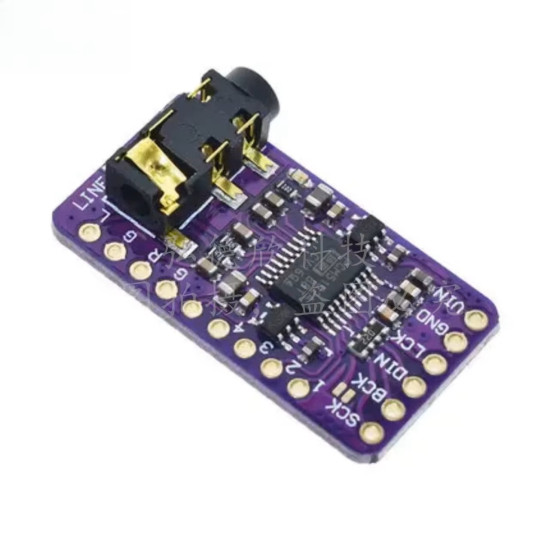
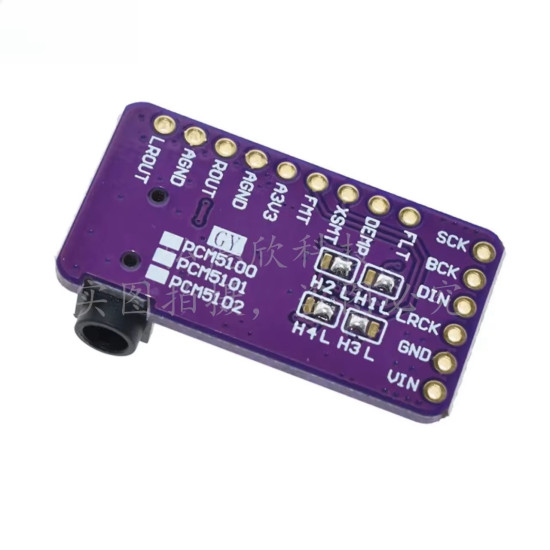
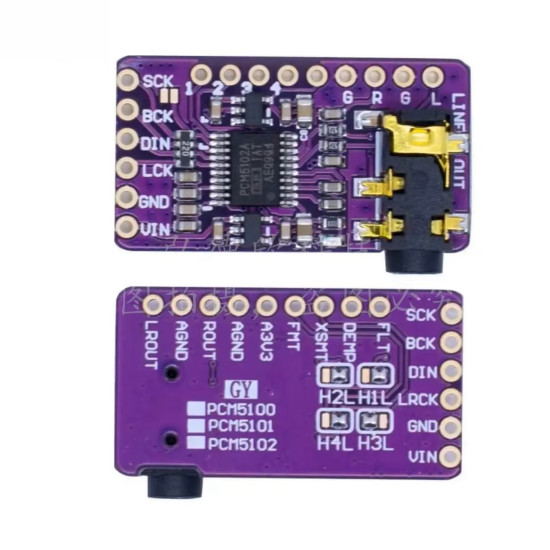


GY-PCM5102 I2S IIS DAC Decoder Board, Lossless Digital-to-Analog Converter for Raspberry Pi/Microcontroller
???? Why Do Audio Makers Choose This DAC Decoder Board?
1. Professional Lossless Decoding, Clear and Delicate Sound Quality
Equipped with TI PCM5102 core chip, it supports up to 24bit/192kHz sampling rate, perfectly decoding lossless audio formats such as FLAC and WAV. Built-in high-quality operational amplifier, with a signal-to-noise ratio (SNR) of up to 102dB and a total harmonic distortion (THD+N) as low as -84dB, effectively suppressing background noise, making human voices more transparent and musical instrument details clearer, and eliminating the vagueness of ordinary decoders.
2. Standard I2S Interface, Zero-Loss Data Transmission
Adopting I2S (IIS) digital audio interface, it directly receives pure digital signals from microcontrollers and Raspberry Pi, avoiding interference issues in traditional analog transmission. It supports independent transmission of left channel, right channel, and clock signals, ensuring more accurate data synchronization and safeguarding the integrity of audio signals from the source, making it a core component for improving the sound quality of DIY audio equipment.
3. Wide Compatibility + Driver-Free Design, Easy for Beginners
No complex driver program is required; it works immediately after power-on. Perfectly compatible with mainstream development boards such as Raspberry Pi (all series), Arduino, ESP32, and STM32. Supporting wide-voltage power supply of 3.3V-5V, it can be directly connected to the power pin of the development board without an additional voltage regulator module. Only 4-6 wires are needed for connection, and an audio system can be built in half an hour.
4. Hardware-Level Adjustment, Meeting Personalized Needs
On-board gain adjustment switch, which can flexibly switch 0dB/6dB/12dB/18dB gain according to the impedance of headphones/speakers, adapting to various audio output devices from in-ear headphones to small passive speakers. Equipped with a mute control pin, it supports intelligent control of audio playback/pause through a microcontroller, with strong expandability.????️ Comprehensive Application Scenarios
Raspberry Pi Audio Upgrade: Build a lossless music player for Raspberry Pi, replacing the built-in low-quality audio output. Match with Kodi or Volumio system to achieve Hi-Fi sound quality experience.
DIY Portable Player: Combine with ESP32 + TF card module to make a portable device supporting lossless audio playback, and match with lithium battery for outdoor music listening.
Smart Speaker Development: Used in AI voice speaker projects to improve the sound quality of voice broadcast and music playback, making the interaction experience better.
Car Audio Modification: Connect to the car microcontroller system, convert digital audio signals to analog signals, drive car speakers, and improve car music quality.
Student/Maker Experiments: Audio decoding experiments for electronic information majors, audio development practice of embedded systems, or scientific innovation projects related to acoustics.
Industrial Audio Equipment: Serve as a core decoding component in broadcasting equipment and audio monitoring instruments to ensure stable output of audio signals.


-250x250.jpg "MQ-4 Methane Gas Sensor Natural Coal Co Methane Detector Module for Arduino")
-250x250.jpg "MQ-4 Methane Gas Sensor Natural Coal Co Methane Detector Module for Arduino")




-250x250.jpg "100pcs 10 Types Car Remote Control Touch Push Button Micro Switch")